Improve third party profiles AI systems already cite
Use AI Search citations to prioritize the directory, review, and profile pages that deserve attention, then review the information AI systems and buyers use to understand your brand.
Why third party profile quality matters
AI Search systems often rely on third party sources when they explain categories, compare companies, or support recommendations. These sources can include software directories, review platforms, local directories, media profiles, partner pages, and industry specific listings.
This matters because third party profiles can shape how your brand is understood outside your own website:
- Decision support sources influence trust. Directories, review pages, and profile pages help buyers compare options, understand credibility, and decide which companies to consider.
- Incomplete profiles can weaken external signals. If a profile is outdated, unclaimed, poorly categorized, or weaker than competitor profiles, it may reduce trust instead of supporting visibility.
- Marketplaces follow a different logic. Marketplaces are separate because buyers can usually complete the transaction directly there. This workflow focuses on sources that provide information for a buying decision, but where the transaction does not happen.
- Citation visibility helps with prioritization. A profile on a platform that AI systems already cite for your category can be more important than a profile on a source that rarely appears in AI generated answers.
- Review gaps can create clear opportunities. If close competitors have stronger review volume, review quality, or review recency on a cited source, that profile may deserve attention.
Relevant sources can include platforms such as G2, Trustpilot, Capterra, Tripadvisor, and OMR Reviews.
The goal is not to update every listing. The goal is to focus on the third party profiles that are most likely to influence how your brand is understood, compared, and recommended in AI Search.
GEO Playbook: Improve brand visiblity by prioritizing third party profiles AI systems already cite
This playbook explains how to identify third party profiles that already exist for your brand, and how to prioritize your optimization efforts.
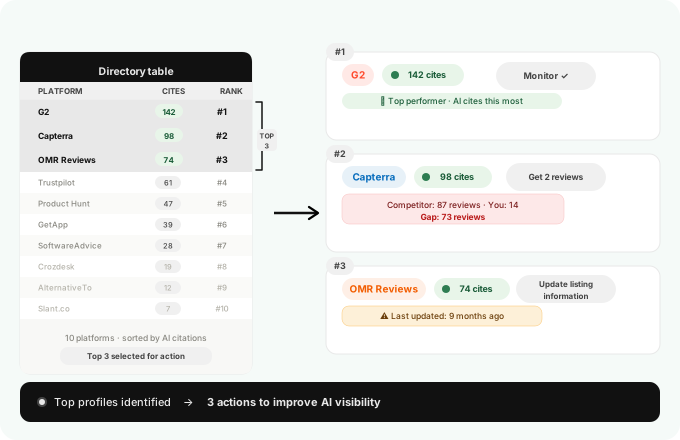
The output is a practical list of profile review priorities. For each profile, you should know whether it needs to be updated, monitored, or supported with more customer reviews.
Start with profiles that already exist for your brand. Include profiles your team created, profiles you have claimed, profiles detected by external platforms, and profiles that were manually marked as listed.
Focus on directories, review pages, local listings, analyst or media profiles, partner pages, and industry specific listings. Exclude marketplaces where users can buy directly, because those follow a different optimization logic.
In ALLMO, a separate agent can automatically detect existing directory and review profiles. Users can also update this list manually on the Directory and Review pages view.
A profile on a frequently cited platform may deserve more attention than a profile on a source that rarely appears. Use all relevant prioritization signals, including citation frequency, high intent prompt relevance, model coverage, and competitor visibility.
Especially check whether the platform mostly appears for prompts where you are mentioned or not. If an AI model cites a review page and then includes a competitor in the answer, this is a strong indicator that you need to step up your game on that platform.
In ALLMO, you can find an overview of all platforms found in AI Search and profiles found for your company here: Directory and Review pages
Review whether each important profile gives AI systems and potential buyers enough information to understand your company. Check whether the profile is accurate, complete, claimed, and aligned with your current positioning.
When auditing your presence, make sure the content on the page about your company is up to date. This includes identifying missing descriptions, outdated product information, wrong categories, broken links, old visuals, vague positioning, and missing proof points. For review driven sites, check how your company compares against competitors and individual statements from customers that may strengthen or damage your brand.
Decide what each important profile needs. Possible actions include claiming the profile, reviewing the description, checking categories, updating screenshots, adding product details, linking to stronger resources, adding proof points, requesting new reviews, responding to reviews, or monitoring competitor changes.
Make each action specific enough for someone to complete. Instead of writing “improve profile,” write what should be reviewed, where it should be reviewed, and why it matters.
For example: “Review the G2 profile because it appears in AI answers for comparison prompts, but the category and description no longer reflect the current product positioning.”
Another common outcome is, to get customers to write reviews on the most important platforms.
Profile optimization is not a one time task. After the initial cleanup, review important profiles at least monthly. The right cadence depends on how dynamic your industry is, how often competitors receive reviews, and how often cited sources change.
Track what changed, when it changed, and which profile was reviewed or updated. After new AI visibility data is available, check whether the platform is still cited and whether your brand is represented more accurately.
In ALLMO, this playbook runs weekly so profile priorities stay connected to current AI Search data.
What to look for
Look for third party profiles where an improvement can create a stronger external signal for AI systems and buyers. The strongest opportunities usually combine AI citation visibility with a clear, realistic improvement gap.
When reviewing profiles, focus on these signals:
- Repeated citations: Platforms cited repeatedly across prompts, models, or competitor searches.
- High intent prompt relevance: Profiles on pages used for comparisons, alternatives, reviews, pricing, or buying criteria.
- Model coverage: Sources that appear across several AI systems instead of only one answer from one model. They are more likely to stay relevant, even if individual AI search algorithms change.
- Competitor visibility: Sources for answers where several competitors are visible, but your brand is missing.
- Reviews: Review pages where competitors have stronger review volume, quality, or rating.
- Profile completeness: Profiles with outdated product information, old screenshots, vague positioning, broken links, wrong categories, or missing proof points.
- Realistic actionability: Profiles your team can claim, edit, update, enrich, review, monitor, or support with more customer reviews. For example, if a competitor has hundreds more reviews, it will be tough to catch up, and you may want to prioritize another review site that is easier to win first.
Do not treat every listing equally. A small number of high impact profiles usually deserves more attention than a long list of low relevance profiles.
Key Benefits
- Focus profile work Prioritize the third party profiles most likely to shape AI generated answers and buying decisions.
- Improve external trust signals Strengthen the information AI systems and buyers see on cited decision support sources.
- Find review and content gaps Compare citation frequency, model coverage, profile completeness, review strength, and competitor gaps.
- Create clear next actions Decide which profiles to review, update, monitor, or support with more customer reviews.
Who it's for
Use this workflow to identify which existing profiles deserve attention before investing time in profile updates, review requests, or listing cleanup.
Use AI Search citations to decide which third party profiles can support visibility, trust, and category relevance.
Use profile insights to review descriptions, positioning, categories, screenshots, proof points, and supporting information on third party platforms.
How ALLMOs GEO agent runs this workflow
ALLMO’s GEO agent run this workflow automatically every week.
The workflow builds on another ALLMO agent that detects existing directory and review profiles for your brand. Users can also update this profile list manually on the Directory and Review pages view, and add additional context and instructions to the agent.
From there, ALLMO analyzes AI Search results for your target prompts, extracts cited third party sources, and matches them with your existing profiles. The agent then prioritizes which profiles deserve attention based on citation frequency, high intent prompt relevance, model coverage, competitor gaps, review gaps, platform relevance, and profile completeness.
The output is a prioritized list of profiles to review, update, monitor, or push with more reviews. This is important because your team knows best what changed inside the company, which positioning is accurate, and which proof points should be reflected publicly.
You can apply the workflow manually. ALLMO helps you run it faster, repeat it weekly, and keep profile priorities tied to actual AI Search visibility data.
Frequently asked questions
How does this improve ChatGPT visibility?
AI systems often use third party sources to understand companies, compare alternatives, and support recommendations. Improving important profiles can give AI systems clearer external information about your brand, although it does not guarantee that a specific answer will change immediately.
How is this different from finding platforms where my brand should appear?
Finding platforms is about discovering missing source opportunities. This workflow is about improving profiles that already exist or have already been marked as listed, then deciding which ones deserve attention first.
Are marketplaces included?
No. Marketplaces should be treated separately. The main goal of marketplaces is to facilitate a transaction on the platform. This workflow focuses on directories, review pages, and profile pages that help buyers make a decision, but where the transaction does not happen directly.
Which external profiles should we improve first to improve AI search performance?
Start with profiles on platforms that are often cited in AI answers, appear across several models, are relevant to high intent prompts, show competitor gaps, have review gaps, or have weak profile completeness.
What profile improvements matter most?
The most important improvements are usually accurate positioning, complete descriptions, correct categories, current visuals, strong proof points, review volume, review quality, and review recency.
Is this an SEO tactic or a GEO tactic?
It connects to both. Traditional SEO and reputation work often improve third party profiles. GEO adds a new prioritization layer by focusing on the external sources that AI systems already cite or may use to ground answers.
How often should we repeat this?
After the initial cleanup, review important profiles at least monthly. The right cadence depends on how dynamic your industry is. In ALLMO, this playbook runs weekly.
Does this only work with ALLMO?
No. You can apply this workflow manually by collecting AI Search answers, reviewing cited sources, and checking your existing profiles. ALLMO's GEO agents make the process faster, more consistent, and easier to repeat.
More playbooks
Keep building your AI visibility strategy with these next steps.
Check whether newly published pages are visible in AI search environments, so you can find discovery gaps before they affect performance.
Analyze the pages AI systems already cite, understand what page formats they prefer, and use those patterns to create new content to improve your visibility in AI generated answers.
Analyze metadata from frequently cited pages to understand how sites that shape AI answers are structured.