
Analyze winning patterns from the Pages AI Trusts
Analyze metadata from frequently cited pages to understand how sites that shape AI answers are structured.
Why cited page metadata matters for GEO
AI systems often rely on a limited set of sources when they answer questions about a category, product, competitor, or buying decision. These cited pages influence which brands are mentioned, which explanations appear, and which sources users are encouraged to trust.
Citation data shows which URLs appear in AI generated answers. But a URL list alone does not explain what those pages contain, how they are structured, or which signals they expose.
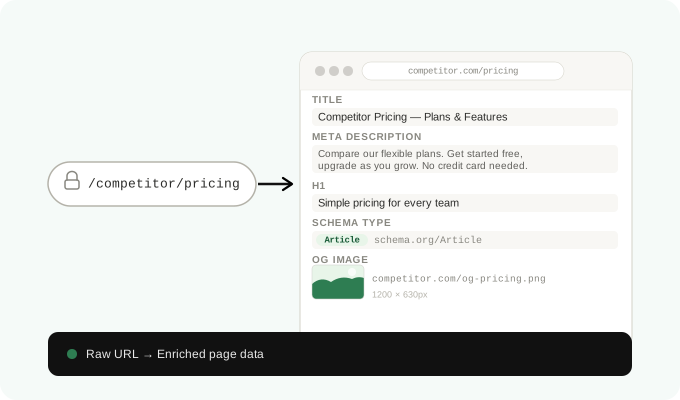
That is why cited page metadata is useful. By extracting titles, descriptions, headings, links, schema, robots signals, and other page level data, you can turn raw citation lists into a structured source dataset.
This dataset becomes the foundation for other AI Search workflows. You can use it for content research, competitor analysis, on page optimization, and agentic GEO workflows.
In the GEO industry, there are a lot of opinions and generic advice. What works in one industry may not work in another. This playbook helps you understand how to analyze what really works for your specific industry.
GEO Playbook: How to extract data from pages AI systems already trust
To apply this playbook, start with pages that are cited in AI Search results for your target prompts. These can come from manual tests in ChatGPT, Perplexity, Gemini, or another AI Search tool, or from citation data in your ALLMO dashboard.
The goal is not to create recommendations immediately. The goal is to enrich cited URLs with useful page data so later analysis can work from a stronger source dataset.
Collect the URLs that AI systems cite when they answer questions about your category, competitors, or customer problems.
Prioritize URLs that appear repeatedly across prompts, models, or high intent questions. These pages are stronger starting points than sources cited only once.
You can also narrow the list by prompt group, market, language, competitor, topic, or domain category.
Fetch each cited URL and store the final URL after redirects.
Also store the HTTP status. This tells you whether the page was successfully fetched, redirected, blocked, missing, or unavailable.
This step matters because a cited URL is not always the same as the final page that is loaded. Redirects, canonical URLs, and failed requests can change how you interpret the source.
Make sure to respect robots.txt and other access restrictions.
For each successfully fetched HTML page, extract the basic page metadata.
Useful fields include:
- final URL after redirects
- HTTP status
- page title from the title tag
- meta description
- canonical URL
- robots meta flags, including noindex and nofollow
- Open Graph title
- Open Graph description
- Open Graph image
- JSON LD schema types, including types inside graph objects
This data helps you understand how the page presents itself to search systems, social previews, crawlers, and AI retrieval systems.
Next, extract the visible structure and link data from the page.
Useful fields include:
- H1 through H6 headings
- heading level and heading text
- image count
- images with alt text
- images without alt text
- internal links with href, anchor text, and rel
- external links with href, anchor text, and rel
- total internal link count
- total external link count
Headings show how the page is organized. Image counts and alt text can reveal how much visual content is used and whether images are described. Internal and external links show how the page connects to other pages and sources.
Once the cited pages are enriched, use the dataset as input for other workflows.
You can compare source patterns, review competitor pages, identify common heading structures, analyze cited third party sources, detect technical issues, or brief content improvements.
This playbook lays the foundation. The enriched data makes later GEO workflows more specific because you can analyze the actual pages AI systems cite, not just the URLs.
What data to check
When you review enriched cited pages, focus on the fields that explain what the page is, how it is structured, and whether it can be used reliably for deeper analysis.
- Final URL: Check where the cited URL resolves after redirects. This helps you understand the actual page AI systems may have used as a source.
- HTTP status: Check whether the page was fetched successfully, redirected, blocked, missing, or unavailable.
- Page title: Review the title tag to understand how the page describes its main topic.
- Meta description: Review the meta description to see how the page summarizes itself.
- Canonical URL: Check whether the page points to another canonical version.
- Robots meta flags: Review whether the page uses noindex or nofollow signals.
- Headings: Review H1 through H6 headings to understand the page structure, section logic, and topic coverage.
- Image counts: Check total images, images with alt text, and images without alt text to understand how visual content is used and described.
- Internal links: Review internal links, anchor text, and rel attributes to understand how the page connects to the rest of the website.
- External links: Review external links, anchor text, and rel attributes to understand which outside sources the page references.
- Open Graph data: Check the Open Graph title, description, and image to understand how the page is presented in previews.
- JSON LD schema types: Review extracted schema types, including types inside graph objects, to understand how the page identifies itself structurally.
- Domain category: Use ALLMO’s domain classification to understand the broader source type, such as directory, review site, media site, community, documentation, or another category.
Together, these fields turn a cited URL into a richer source profile. That profile can then support content analysis, competitor research, source gap analysis, directory research, and other GEO workflows.
Key Benefits
- Understand cited sources See what frequently cited pages contain and how they are structured.
- Add context to citation data Use metadata to better understand why certain pages may appear in AI answers.
- Find source patterns Compare titles, descriptions, headings, and page types across trusted sources.
- Save research time Review source data without manually opening every cited page.
Who it's for
Use this playbook to understand which pages AI systems cite and what those pages have in common.
Review cited page metadata to understand content structure, including headers and linking.
Generate best practices, by seeing how the best performing pages in your indsutry are structured.
How ALLMO runs this workflow
ALLMO can enrich cited pages automatically. When enabled the automation runs each Monday and takes the top 50 cited URLs from AI Search results, fetches the HTML pages, follows redirects, stores the final URL and HTTP status, and extracts useful page data.
For each successfully fetched page, ALLMO extracts metadata, headings, image counts, internal links, external links, Open Graph fields, robots signals, canonical URLs, and JSON LD schema types.
This creates a structured source dataset that can support other analytics and GEO workflows. You can review the data manually, or use ALLMO’s agents to build on it for content analysis, competitor research, source gap analysis, and other playbooks.
Frequently asked questions
Is this a content recommendation playbook?
Not directly. This playbook focuses on showing which data is woth extracting and reviewing from cited pages. The enriched data can later support content recommendations, competitor analysis, source gap analysis, and other GEO workflows.
What data should I extract from cited pages?
Useful fields include final URL, HTTP status, page title, meta description, canonical URL, robots flags, headings, image counts, internal links, external links, Open Graph data, and JSON LD schema types.
Why not just look at citation counts?
Citation counts show which pages appear often. Enriched page data helps explain what those pages contain, how they are structured, and which signals they provide.
Does ALLMO classify the pages?
ALLMO classifies domains into categories and extracts JSON LD schema types from enriched pages. Some GEO agents may also classify pages inside their own workflows, but this is not currently part of the analytics dashboard.
How often should this run?
Run it when you collect new citation data, add new prompt groups, enter a new market, or prepare for deeper content, competitor, or source analysis.
More playbooks
Keep building your AI visibility strategy with these next steps.
Check whether newly published pages are visible in AI search environments, so you can find discovery gaps before they affect performance.
Analyze the pages AI systems already cite, understand what page formats they prefer, and use those patterns to create new content to improve your visibility in AI generated answers.
Find directories, review sites, and comparison pages, that are referenced in AI generated answers. Check where your brand is missing, where your profile is incomplete, and which sources are worth improving first.