
Analyze the most cited page formats to create content that matches AI preferences.
Analyze the pages AI systems already cite, understand what page formats they prefer, and use those patterns to create new content to improve your visibility in AI generated answers.
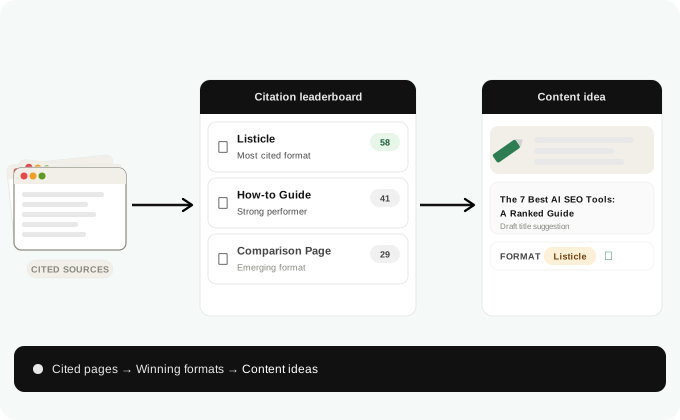
Why cited pages matter
AI search systems often use external pages to support their answers. These citations show which sources currently shape what people see when they ask questions about your category, products, competitors, or use cases.
For content teams, analyzing these cited pages is useful because they reveal patterns. You can see what types of pages AI systems rely on, how those pages explain a topic, and which details they include. Common examples include comparison pages, buying guides, tutorials, category explainers, statistics pages, reviews, and lists of alternatives.
Many companies already have great content, but it often does not match the formats, structures, or information patterns AI systems rely on when generating answers. This playbook helps you see where your content may be strong for human readers, but misaligned with what AI systems tend to cite.
The goal is not to copy cited pages. The goal is to understand why they are useful, where your own content is missing, and how you can create a better answer for your audience.
How to use the playbook
This playbook reviews the pages that AI systems cite for relevant prompts and uses those patterns to identify new content opportunities.
Start by looking at which pages appear repeatedly across AI generated answers. Then you analyze what those pages do well, compare them with your own content, and identify gaps where your brand could provide a clearer, more complete, or more useful answer.
Use this playbook when you want to plan content for AI Search based on observed citation behavior, not only on keyword volume, search rankings, or internal assumptions.
Start by checking the pages that appear most often in AI answers relevant for your company. Start by asking ChatGPT questions and note the provide sources, or use a prompt monitoring tool like ALLMO to extract the source pages for your tracked prompts automatically.These pages matter because they already influence how AI systems explain your category.
For each page, note title, meta description, canonical URL, headings (H1-H6), image counts, internal and external links, open graph, and JSON-LD schema types. ALLMOs enrich top cited pages workflow automatically takes care of this part for you.
Look for elements that appear across several cited pages. These may include clear definitions, comparison tables, step by step guidance, lists of alternatives, pricing context, statistics, examples, expert explanations, FAQs, or strong summaries. You can also parse all the agents
Focus on the structure and usefulness of the content, not only the topic. Ask what these pages do well and why an AI system might use them as supporting sources.
Check whether your website already covers the same questions with equal or better depth, clarity, and usefulness.
Mark gaps where your content is missing, too thin, outdated, too sales focused, or hard to understand. Also mark pages that already exist but could be improved with clearer structure, stronger examples, better comparisons, or missing sections.
This step helps you separate general content ideas from actual content gaps on your website.
Turn the citation patterns into original content ideas for your own website. For each idea, define the page type, title, target audience, search intent, angle, key sections, and reason the page should exist.
Use the extracted headline patterns, such as H1, H2, and H3 structures, to draft an initial outline for the page. This outline can guide your own writing process or be passed to a writing agent as a structured starting point.
Aim to create the most useful answer for the topic. Do not copy the cited source. Use the pattern as a signal, then add your own expertise, examples, data, and perspective.
Key Benefits
- Learn from proven sources, that AI systems already use Group page types, formats, and information structures, to extract winning patterns from content that already appears in AI generated answers.
- Plan content with stronger evidence Use citation patterns as evidence when drafting patterns.
- Understand what works in your industry Citation patterns can vary strongly across industries. Don't rely on generic advice on most cited pages. Identify the page formats, structures, and content patterns AI systems already cite in your category, so your content ideas are based on real industry signals.
- Improve your chance of being cited Create clearer, more complete titles and content, based on proven patterns AI systems can understand, extract, and reference when answering relevant questions.
Who it's for
Use this playbook to understand what AI systems already cite and turn those patterns into original articles, guides, and landing pages.
Use AI citation data to prioritize content that can help your brand appear in high intent answers.
Understand which page formats, structures, and topics AI systems already cite in your industry before creating your website, first articles, or category pages.
Frequently asked questions
Does this mean copying cited pages?
No. The goal is to learn from the structure, clarity, and usefulness of cited pages, then create original content with your own expertise.
Which cited pages are most important?
Start with pages that are cited frequently across several prompts, models, or high intent questions. These pages are stronger signals than sources cited only once.
Can I use this to improve existing content?
Yes. Use citation patterns to update existing pages, add missing sections, improve structure, include better examples, and make the page more useful.
What if AI mostly cites third party sites?
That is still useful. It shows which external sources currently influence AI answers and what type of content your site may need to compete.
Does this mean copying cited pages?
No. The goal is to learn from the structure, clarity, and usefulness of cited pages, then create original content with your own expertise.
How often should I run this?
Run it monthly or when you add new prompt groups, competitors, markets, or product categories.
More playbooks
Keep building your AI visibility strategy with these next steps.
Check whether newly published pages are visible in AI search environments, so you can find discovery gaps before they affect performance.
Analyze metadata from frequently cited pages to understand how sites that shape AI answers are structured.
Find directories, review sites, and comparison pages, that are referenced in AI generated answers. Check where your brand is missing, where your profile is incomplete, and which sources are worth improving first.