Find the most influencial directory and review pages
Find directories, review sites, and comparison pages, that are referenced in AI generated answers. Check where your brand is missing, where your profile is incomplete, and which sources are worth improving first.
Why third party profiles matter for AI Search
AI systems do not rely only on your own website when they answer questions. They often use external sources to understand which brands exist, how companies are positioned, and which options are worth mentioning.
For high buying intent prompts, these external sources can be especially important. When someone asks for the best tools, top providers, alternatives, or vendors in a category, AI systems often cite pages that already summarize the market. That may include directories, review sites, software databases, partner directories, niche industry resources, and comparison platforms.
If your competitors appear on those sources and your brand does not, AI systems have fewer external signals connecting your company to the category. Your website still matters, but third party presence can influence whether your brand is included, how it is described, and which competitors appear next to it.
This playbook explains how to identify third party platforms frequently cited in AI search, where your company does not have a profile yet. Then, explains how prioritize the platforms where creating or claiming a profile can increase your presence in sources AI systems already use.
GEO playbook: How to find influencial Directory, Review and Comparison pages where your company is missing.
This workflow explains how to find the platforms that are the most influencial for AI answer engines in your industry, then check whether your brand is present on them.
It focuses only on sources where companies can create, claim, or maintain a company profile. The goal is to build a prioritized list of cited platforms where your brand is missing, so you can increase your presence on sources that already shape AI generated answers.
Review the third party sources cited in AI generated answers for your tracked prompts, or ask ChatGPT questions that a typical buyer in your industry would ask. Focus on prompts about your category, competitors, use cases, alternatives, recommendations, and buying criteria.
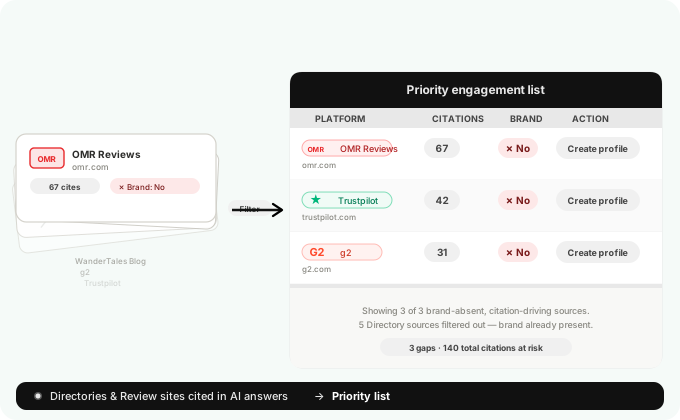
Look for profile based platforms such as review sites, directories, software databases, partner ecosystems, niche industry resources, or comparison platforms where companies can create or claim a profile. In ALLMO, you can filter domains by the category “Directory & Review” to focus this review on the most relevant source types.
Review whether your company already has a profile, listing, or dedicated company page on each cited platform.
Use known profile URLs where available. If no profile URL is known, check the platform search, category pages, competitor profiles, and likely profile URL patterns.
Mark each platform with a simple status:
- Found: your brand has a profile on the platform.
- Not found: your brand does not have a profile on the platform.
In ALLMO the GEO agents automatically searches for profiles on the most cited platforms, and saves all 3rd party profiles.
Focus on platforms where your brand is not found Then prioritize them based on how often they are cited, which prompts they appear for, and whether your competitors are listed there.
A platform should move up your list when it is cited frequently across prompts or models, appears for commercial or comparison prompts, clearly matches your category, audience, region, or buying process, or when the AI answers where it’s cited only mention your competition.
A missing profile matters most when the platform is both visible in AI answers and useful for real buyers.
Turn the prioritized list into concrete actions.
Create missing profiles where the platform allows submissions. Claim profiles where the platform already has an unclaimed listing for your company. Add the core information buyers and AI systems need to understand your business, including your product category, description, website link, use cases, customer segments, screenshots, locations, and relevant proof points.
Some platforms may require outreach, a partner account, a paid listing, or editorial approval. Keep those as separate follow up tasks.
Track completed actions so you can later check whether your third party presence improves and whether AI generated answers include stronger external signals for your brand.
Note: Editorial articles, listicles, and comparison blog posts can also be useful, but they are part of other optimization playbooks. Marketplaces are also a separate source type because users can usually complete a transaction there. In some industries, such as tourism, marketplace platforms like Booking.com can strongly influence AI answers because businesses maintain their own listings there. In those cases, keep marketplace listings updated, but treat them as a related workflow rather than the core directory and review profile workflow.
Optimization Signals to look for
In your AI search grounding sources, look for the following patterns to identify platforms, where it’s worth engaging:
- Platforms that repeatedly appear across several prompts, models, or high intent questions. These are stronger signals than sources cited only once.
- Check the sources of prompts where your competitors are mentioned. If a directory or review site leads to several competitors being cited, but not your brand, it is a strong signal you’ll need to improve your profile to get cited.
- Prioritize sources where your company can realistically create, claim, or maintain a profile. Some cited sources may be editorial pages, closed partner lists, pay-to-win review sites, or marketplaces. Those sources may still be useful to understand the AI search dynamics, but they should not distract from the main goal of this workflow: boosting your credibility in an effective way by finding relevant cited platforms where your brand is missing and can be added.
Key Benefits
- Find missing profiles Identify authorative 3rd party platforms where your brand is not present, yet.
- Prioritize relevant sources Understand which directories and review sites to focus on, by understanding which already appear in AI answers for your category.
- Strengthen external visibility See where to create, claim, or improve profiles on sources that may shape AI recommendations.
- Reduce manual research Use AI citation data to find relevant profile opportunities faster instead of guessing every directory manually.
Who it's for
Use this playbook to identify third party platforms where your brand should be visible. It helps you prioritize off page work based on sources that appear in AI answers.
Find directories, review sites, software databases, and profile based comparison sources that AI systems cite, then check whether your brand appears there.
Use citation patterns to understand which third party platforms shape category recommendations, comparisons, and buying decisions.
Frequently asked questions
What platforms are relevant for this GEO playbook?
This workflow focuses on third party sources where companies can create, claim, or maintain a company profile. This can include directories, review sites, software databases, partner directories, niche industry resources, and profile based comparison platforms. Marketplaces are different because users can usually purchase there, but in some industries, such as tourism, marketplace listings can still strongly influence AI answers and should be kept up to date.
Should we create a profile on every cited platform?
No. Focus on platforms that are relevant, credible, and cited in AI answers for your category. Avoid low quality directories, irrelevant sites, or platforms that do not match your audience.
Why do directories and review sites matter for AI Search?
AI systems may use third party sources as supporting evidence when answering recommendation, comparison, and category questions. If those sources include your competitors but not your brand, AI systems may have fewer external signals that connect your company to the category.
What if our brand already has a profile?
Existing profiles should be reviewed separately for completeness, accuracy, positioning, reviews, and profile quality. In ALLMO you can save existing profiles to move them out of the agentic workflow
How often should we review our 3rd party platform presence?
Review it at least monthly after the initial cleanup. AI citation patterns can change when new competitors, directories, review pages, or industry sources become more visible. If you use ALLMO, the playbook runs weekly so new missing profile opportunities can be found earlier.
Does this only work with ALLMO?
No. You can do the workflow manually by collecting AI Search results, extracting cited sources, and checking whether your brand has a profile on each relevant platform. ALLMOs GEO agent helps by collecting the citation data, classifying sources, checking whether your brand is found or not found, and turning missing profiles into a prioritized action list.
More playbooks
Keep building your AI visibility strategy with these next steps.
Check whether newly published pages are visible in AI search environments, so you can find discovery gaps before they affect performance.
Analyze the pages AI systems already cite, understand what page formats they prefer, and use those patterns to create new content to improve your visibility in AI generated answers.
Analyze metadata from frequently cited pages to understand how sites that shape AI answers are structured.